 Metamoa
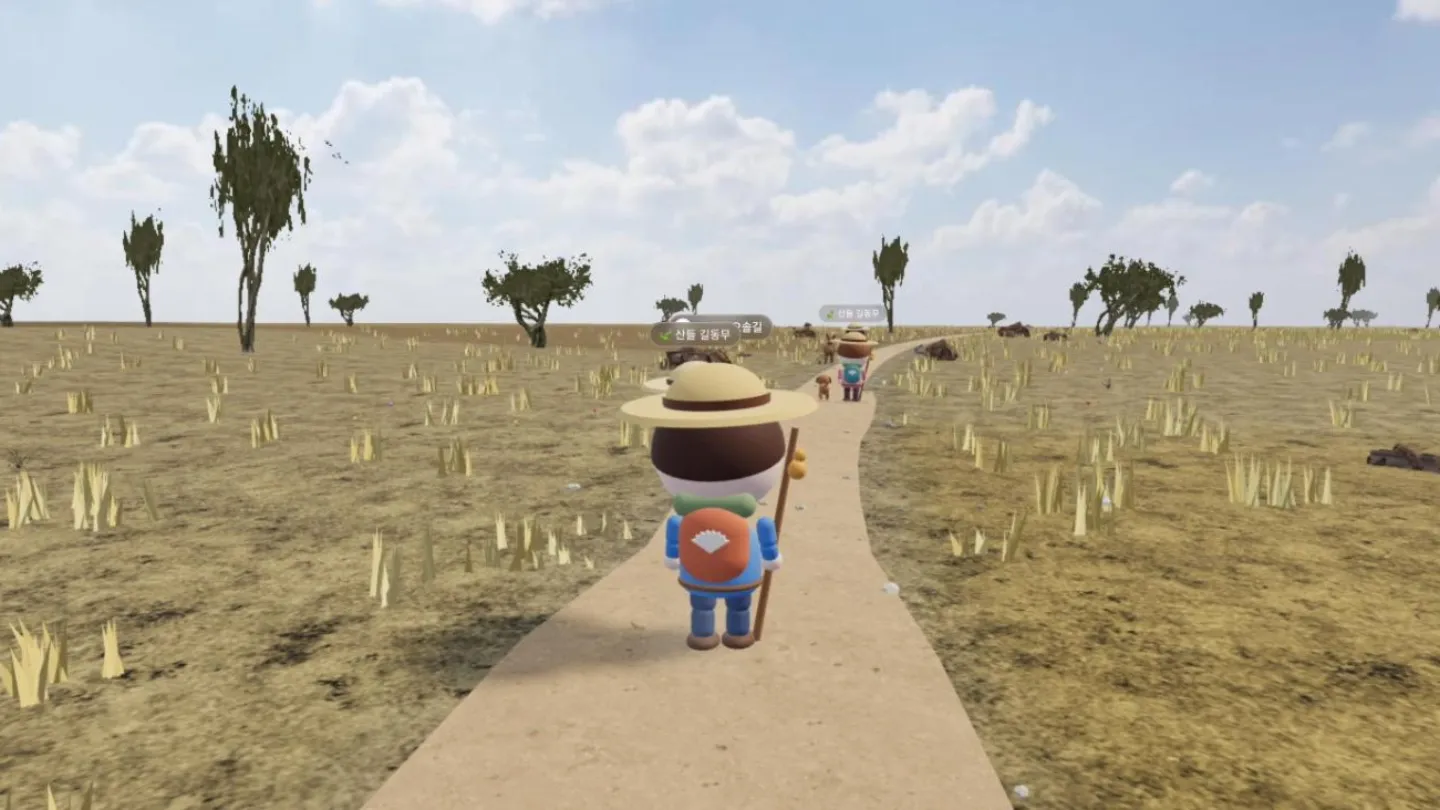
Meterview Vol.08
Not a Road for Going Fast, but a Road for Walking a Long Time
Just by leaving it on, you walk the Camino de Santiago at a pilgrim’s pace on a site for walking together: 온라인 순례길
- Words Moazine editors
- Photos Metamoa · the developer of 온라인 순례길 (온라인 순례길 screens)
English
Moazine’s eighth Meterview is 온라인 순례길, a site where, just by leaving it on, you walk together all the way to Santiago at a pilgrim’s pace. Their parents dreamed of the Camino de Santiago but walked Jeju’s Olle Trail instead because of the cost, and that stayed on the mind of the developer of 온라인 순례길, who made this road alone so that people who find it hard to actually go can walk something similar on screen. It’s a slow road where you trade “부엔 카미노” (Buen Camino) greetings with people walking the same stretch, and where you don’t walk while it’s turned off.
Please introduce 온라인 순례길 in one line. How did you start making it?
It’s a site where, just by leaving it on, you walk the 763.7 km Camino de Santiago together at a pilgrim’s pace (4 km/h).
This summer my parents wanted to go on the Camino de Santiago, but it cost too much, so they gave up and walked the Jeju Olle Trail. That kept staying on my mind. There must be many people who find it hard to actually go, and I thought that if they could walk something similar on screen, even if it’s not the same, it might ease their regret a little, so I started making it.
How did you come up with the idea of a pilgrimage you walk together “just by leaving it on”?
The pilgrimage route isn’t a road for going fast but a road for walking a long time, so I thought spending time, instead of pressing buttons, was the right way. So I made it walk for as long as you leave it on beside you while you study or work. If you leave it on 6 hours a day, it takes about a month, which is similar to a real pilgrimage. There’s no fast-forward or skipping, and you don’t walk while it’s turned off.
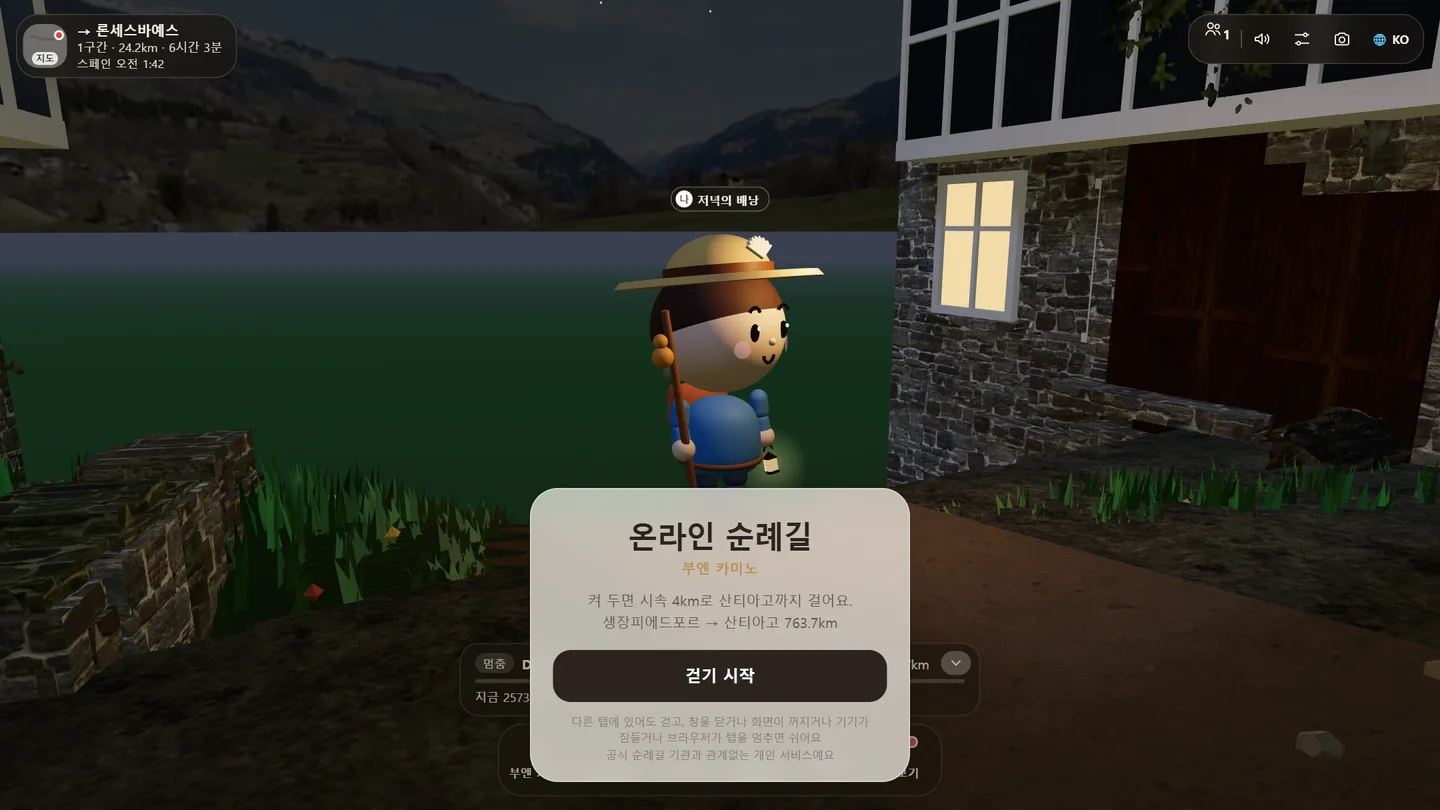
The pilgrimage route isn’t a road for going fast but a road for walking a long time
Developer of 온라인 순례길
In moving the Camino de Santiago onto the screen, which stretch or scene did you put the most effort into?
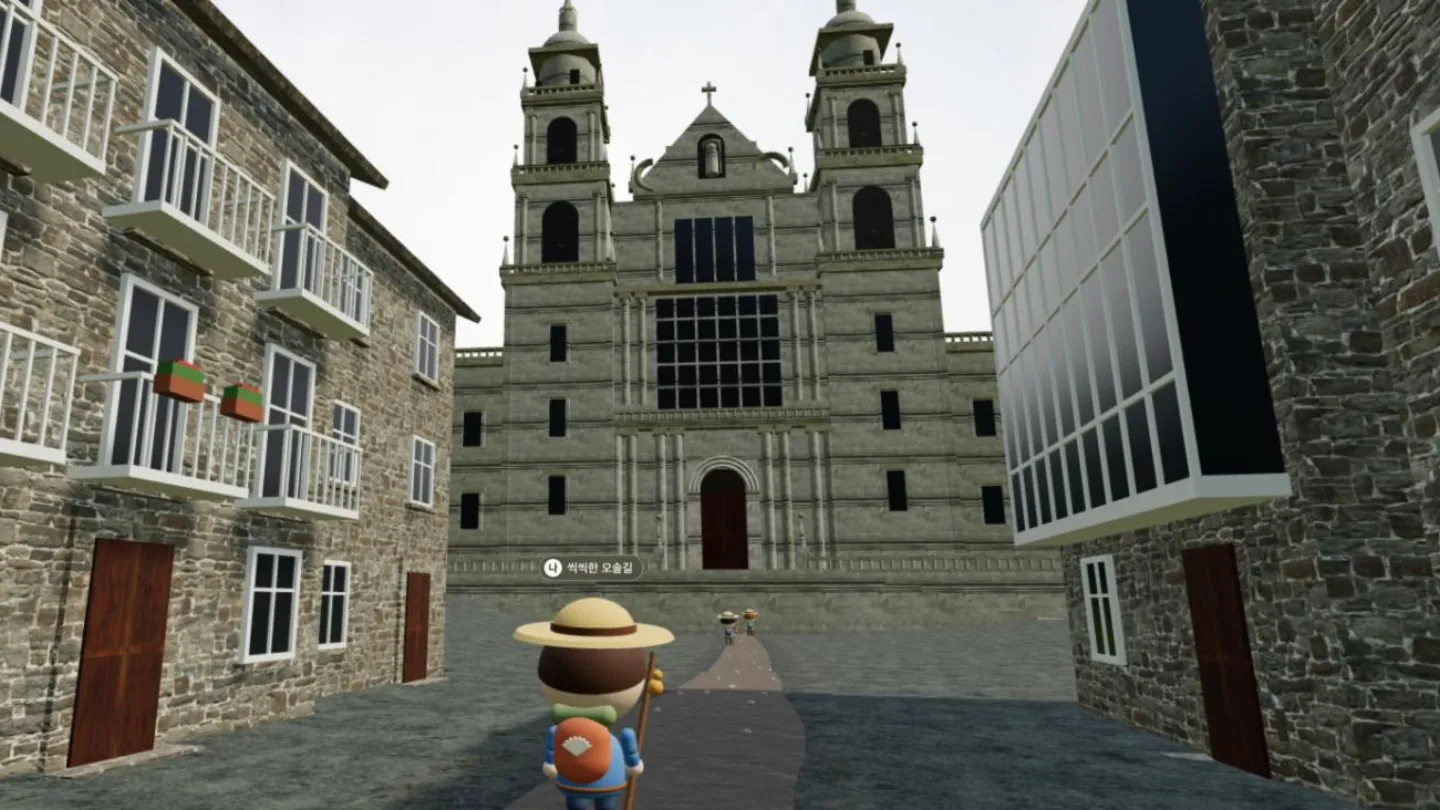
The final destination, the Cathedral of Santiago. It’s where the long, long pilgrimage ends, so I paid the most attention to making you feel you’ve made it all the way to the end when you reach it. I also made the road change stretch by stretch to match the real scenery, like the Pyrenees mountain paths, the vineyards, the Meseta plain and the forests of Galicia.
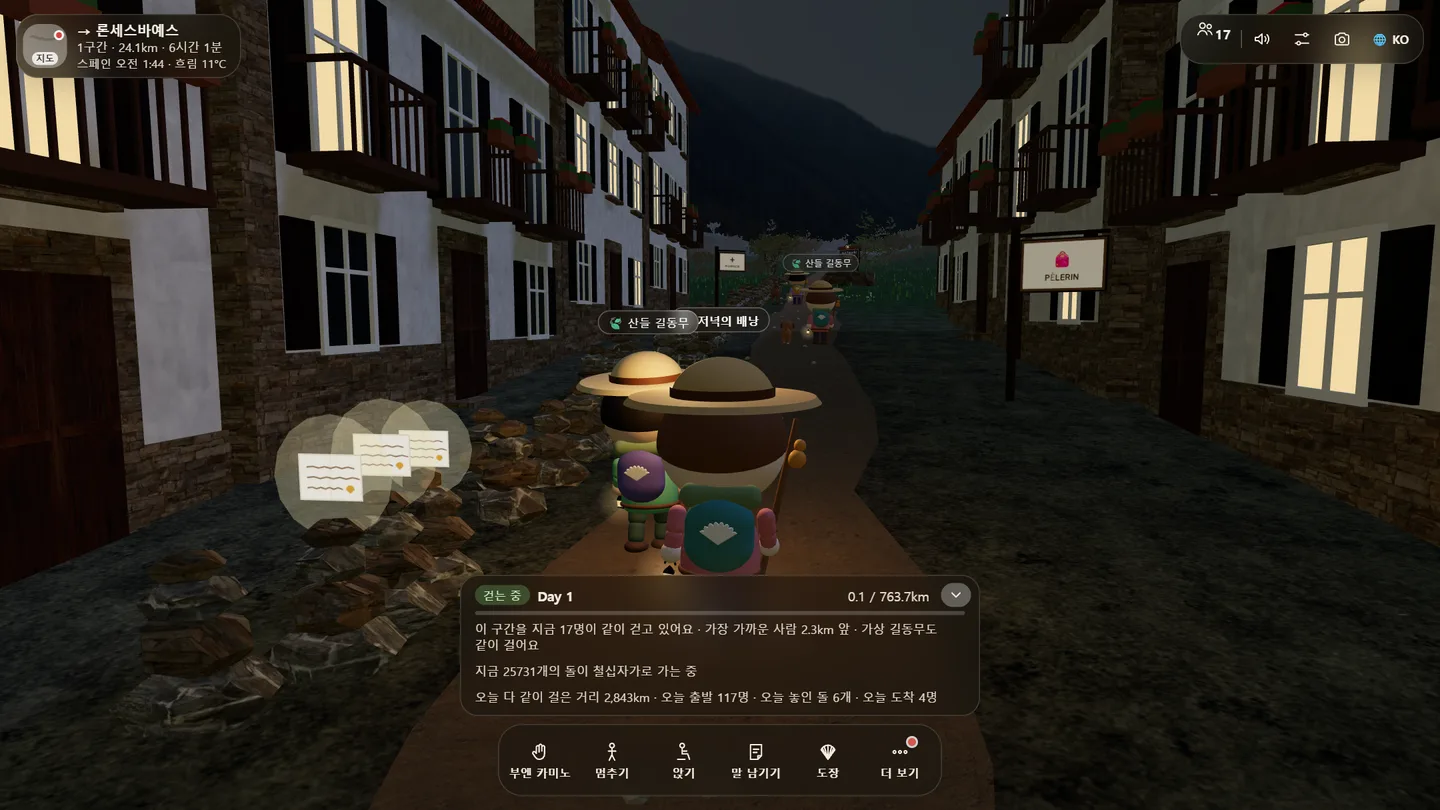
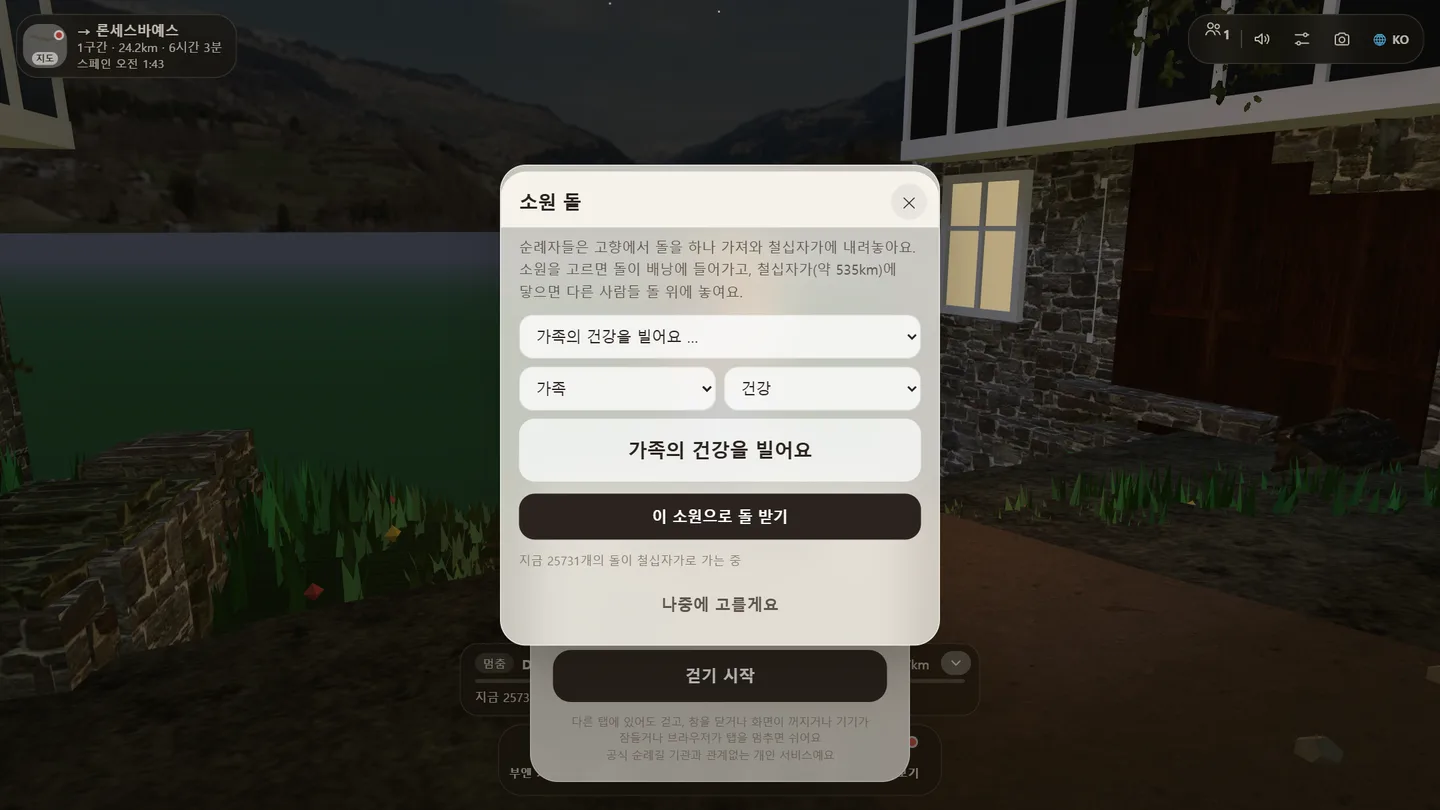
How did you decide on the things that let people sense each other, like greetings with pilgrims on the same stretch, words left on the road and wish stones laid down at the Iron Cross?
These days there’s a lot of talk that divides people into sides and puts everyone on edge, so I wanted this place, at least, to be somewhere you rest for a moment. So I took “부엔 카미노 (Buen Camino, have a good road)”, the greeting pilgrims exchange on the real Camino, just as it is, and made it so you can give it to people on the same stretch with one button. And I made it so the words you leave on the road can only be written by choosing from set sentences and words. Only friends who set out together can freely exchange messages. I thought that even short words are enough to feel that someone is on the same road. I didn’t put in competition or rankings either.
How did you make the sounds that fill the road, like the wind and birdsong, insects at night and the noon bell?
Sounds like the wind, birdsong, night insects and the noon bell I synthesized myself in code. Only the rain sound is a free audio track. It looked like many people leave it on while doing other things, so I paid special attention to sound. I had put in footsteps too, but when I listened myself they were actually distracting, so I took them out. In settings you can turn each kind of sound off or down separately.
Is there a moment from 온라인 순례길 that stays with you?
When the first sharp feedback came from abroad. It was a message saying a week of walking records had disappeared and they would never do it again. 온라인 순례길 lets you walk without signing up, but in exchange your record stays only in that browser, so if you clear the browser data or open it on another device, it doesn’t carry over. I know I can’t satisfy everyone, but it made me a little sad that someone who had walked with us for a week left like that. Since then, I’ve been fixing things so the same thing happens less, like showing the reminder to save your record link one more time.
If there’s a starting point or stretch you recommend to people coming to 온라인 순례길 for the first time, please tell us.
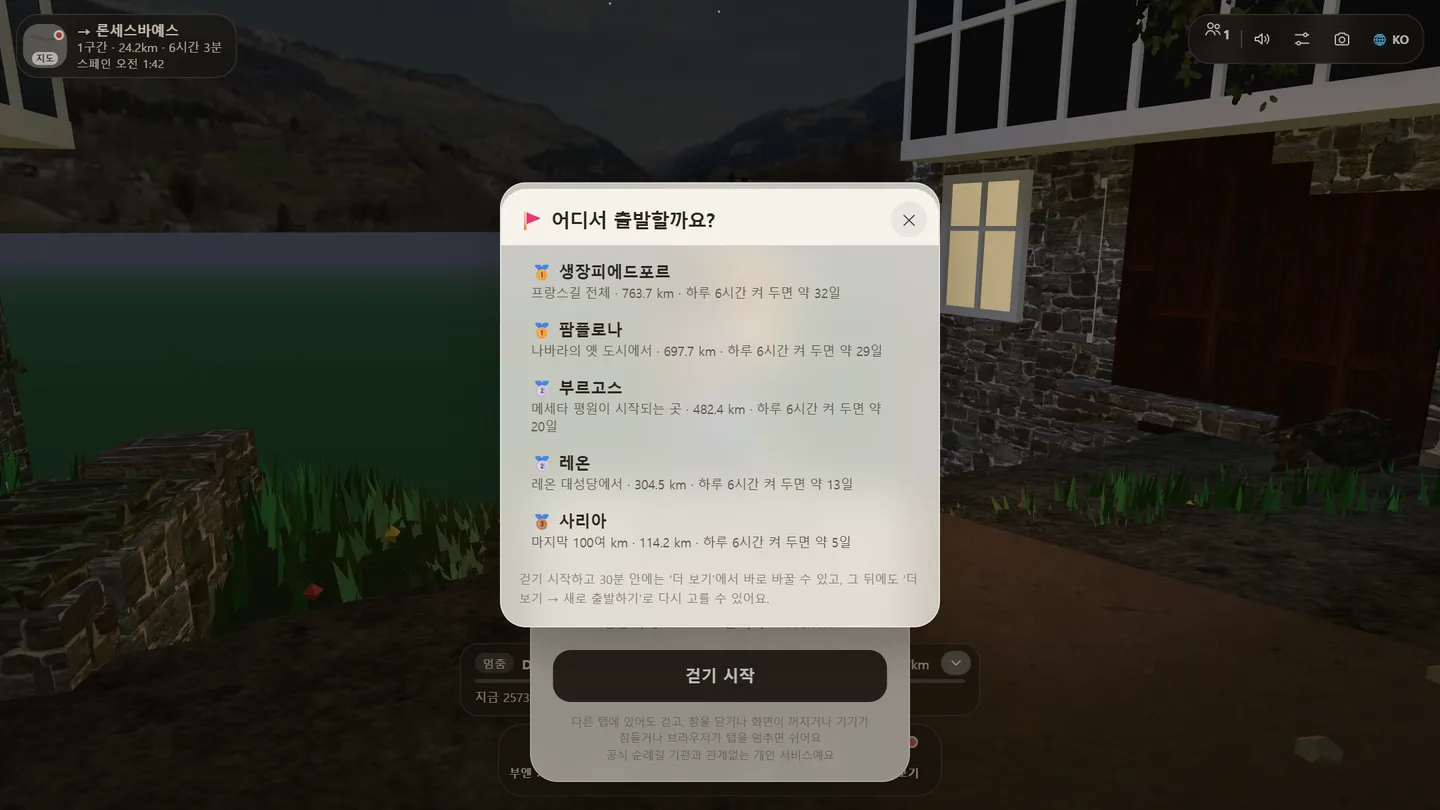
If you don’t have much time, I recommend starting from Sarria. It’s about 114 km to Santiago, so if you leave it on 4–5 hours a day, you can arrive in about a week. If you want to walk from the beginning, starting from Saint-Jean-Pied-de-Port and crossing the Pyrenees is the most Camino-like start.
What AI or tools did you make 온라인 순례길 with? We’re also curious whether you made it alone, or how many people worked on it together.
I made it alone. I wrote the code together with the AI Claude, and made the 3D with Three.js, which runs on the web. For the map routes I used OpenStreetMap, and for the ground and sky textures, free resources from Poly Haven.
About how many people have visited so far? A rough number is fine.
It went public on October 30, and by November 17 about 50,000 people had visited (per Google Analytics). Most are from Korea, but people have come from more than 70 countries and regions, so the screens can be viewed in 8 languages: Korean, English, Spanish, Japanese, Chinese (Traditional and Simplified), German and Thai.
Is there anything you’d like to add to 온라인 순례길 from here on?
I’m putting in the things that come into the feedback box one by one. More than 100 pieces of feedback have come in so far, and many things started from feedback, like resting at an albergue or a food bowl for your walking companion. From here on too, I plan to add first the things the people walking tell me.
Anything you’d like to say before we finish
I hope people who find it hard to actually go can feel, even for a moment, like they’re on that road.