 Metamoa
Meterview Vol.17
If We Happen to Meet in the Courtyard, Remember to Wave
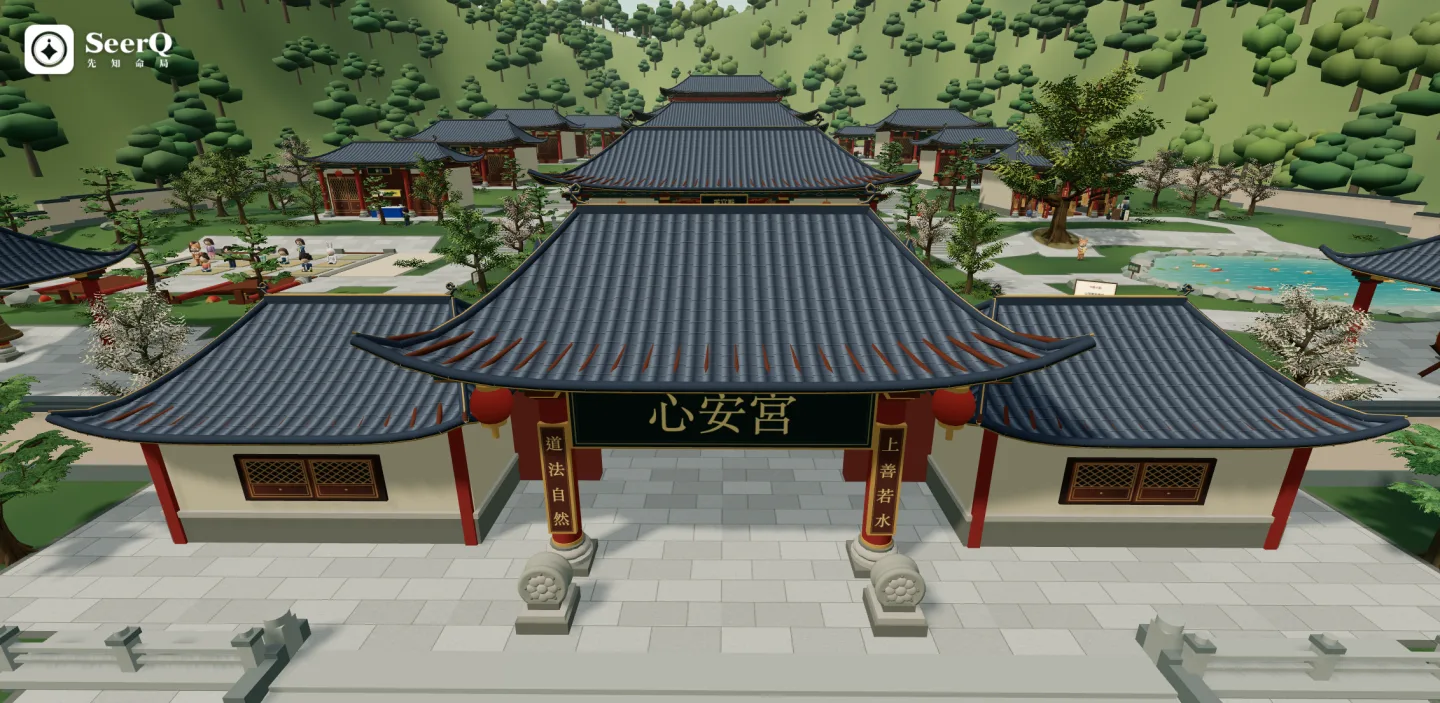
Come in and sit for a while when you’re tired, or meet your friends here: a digital haven that understands how you feel, 心安宮
- Words Moazine editors
- Translation Moazine editors (Korean, English)
- Photos 先知命局 (心安宮 screens)
English
Moazine’s seventeenth Meterview is 心安宮, a 3D Taoist temple modeled on real Taoist temples in China. 先知命局, a Metamoa player too, made its first version alone with AI coding software in spare time, and put the most care into how the mountain gate leads on to the courtyards and halls. It is a place to offer incense, ring the bell, strike the wooden fish, meditate and practice Baduanjin, and wave to a friend across the courtyard. 先知命局 answered in Chinese; this English version is translated from that original, which you can read with the language switch above.
How did 心安宮 begin?
To introduce it in one sentence: 心安宮 is a digital haven that understands how you feel. When you’re tired, you can come in and sit for a while, and when you want to see friends, you can meet up here too.
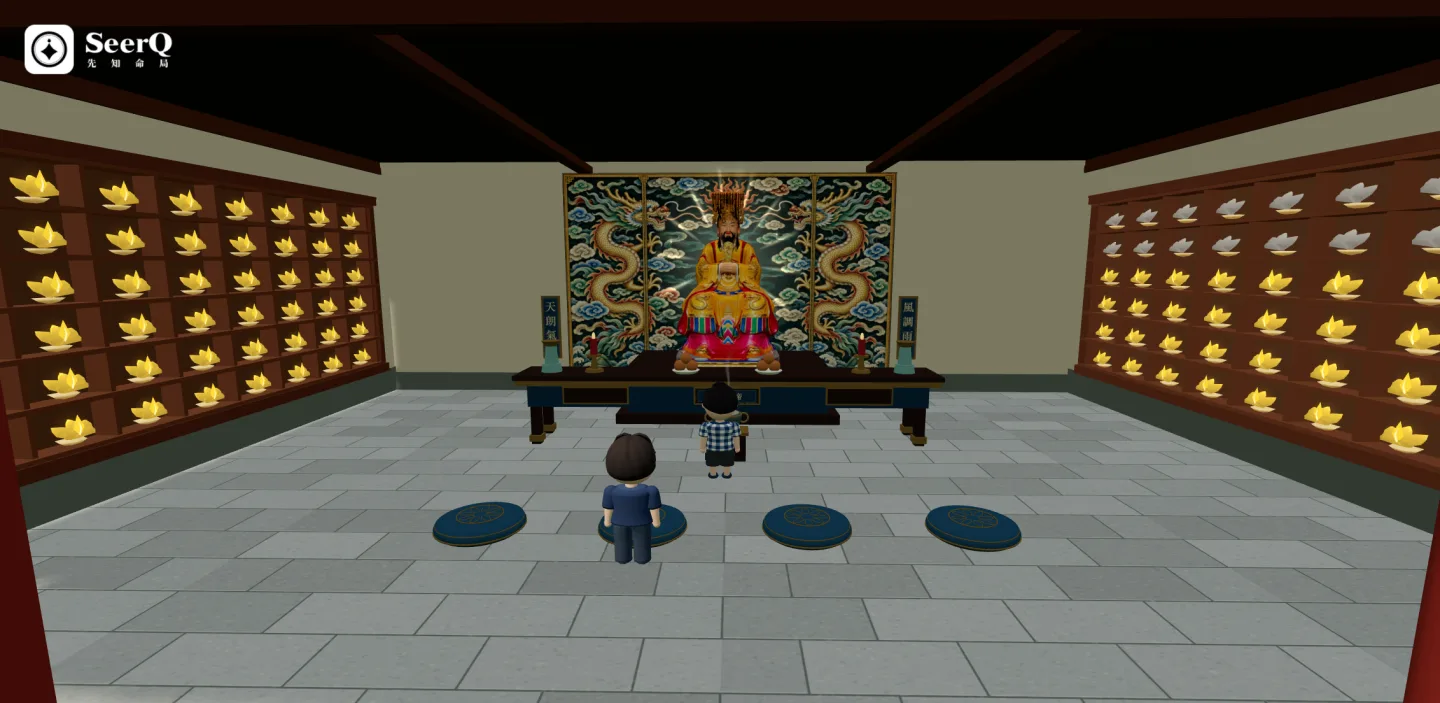
I’m a Metamoa player myself, and I really admire the creators on the platform. Someone turned the feeling of a night drive into a space, and someone else left a little patch of sea on the internet. These works inspired me and made me want to make a place too, so that when something is on people’s minds, they have somewhere to go just by opening a web page. A Taoist temple fits this idea well: if you’re thinking of someone, you can offer a stick of incense for them; if you can’t quite say what’s wrong with you right now, you can first stay in the courtyard for a while. So in my spare time, on my own, with AI coding software, I spent three days making the first version of 心安宮.
Why did you make it a Chinese Taoist temple you can walk into?
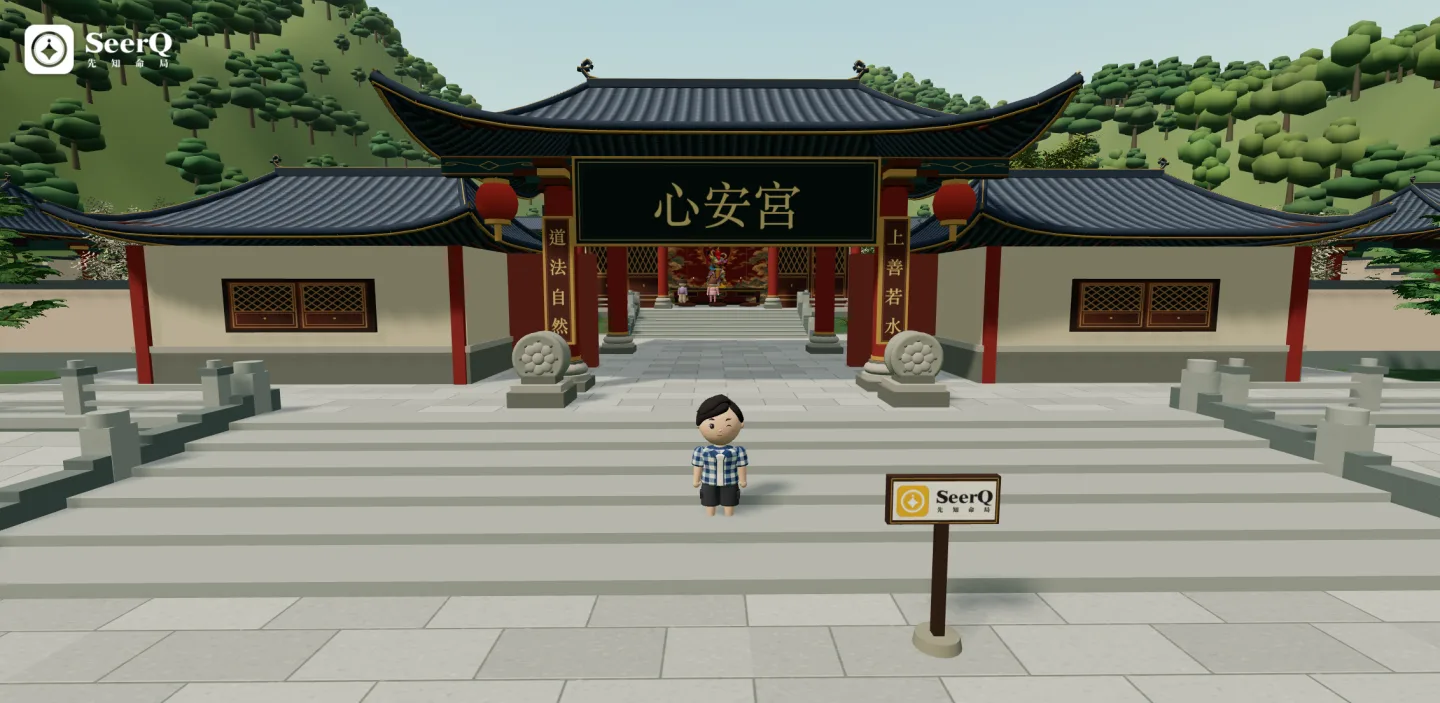
The scenery of 心安宮 is modeled on real Taoist temples in China. What I put the most care into is the layout of the mountain gate, the courtyards and the halls. Looking in from the mountain gate, you can see hall after hall, one behind another; only when you actually walk in do you reach the incense burner and, looking up, see the plaque on the hall. I really hope friends from other countries get the chance to come to know Chinese culture this way. Even if you’ve never been to a Chinese Taoist temple, you can walk through one yourself and see where people offer incense and how they pray for the people they care about.
Offering incense, ringing the bell, striking the wooden fish, meditation and Baduanjin: how did you choose them?
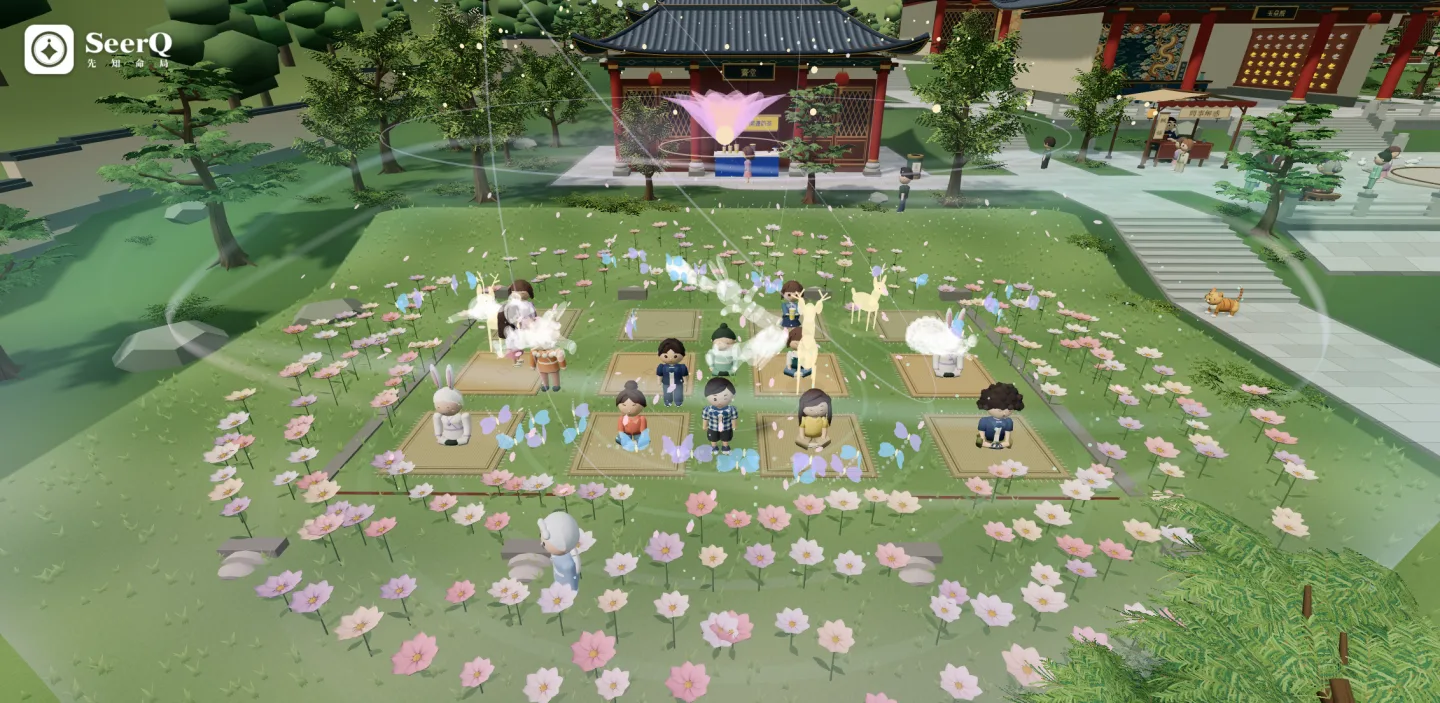
I’d think: when someone comes in carrying a different mood, what would they want to do in that moment? When someone is on your mind, offering incense lets you say your wish properly, once. When your heart is in a mess, you can strike the bell once and wait for the echo to slowly fade, or strike the wooden fish, beat after beat, letting your attention come back to the rhythm in your hands. If you want quiet, sit down and meditate; if you’ve been sitting all day and want to stretch, on the hill behind there’s also a teacher leading everyone in Baduanjin. On a first visit, I’d recommend walking from the mountain gate to the incense burner, making a wish for the first person who came to mind today, and then picking a place that interests you to wander around.
Why did you add waving and hugging?
Sometimes you invite a friend over just to keep them company for a while. When you see them standing at the other end of the courtyard and wave to them, they know you’ve come. Even if the two of you speak different languages, this greeting is understood.
There’s also an Easter egg hidden here that’s good for two people to try together. If you and a player nearby make the same gesture within five seconds, both choosing a hug or both making a finger heart, it sets off a special animation just for the two of you. When a hug succeeds, the two characters walk up to each other, hold each other and spin around. I like hiding the surprise here, because you can’t make it happen alone; you only get to see it when someone happens to answer you.
Even if the two of you speak different languages, this greeting is understood
先知命局 · maker of 心安宮
Is there a funny player moment that stuck with you?
One of the funniest sights to me is everyone coming to do “beating the petty person” (打小人) and then having to wait in line obediently. It’s a folk custom of venting your grudges on a paper figure. Picturing a crowd of people logging on, each with a belly full of anger, and then, once there, waiting very orderly for their turn to let it out: that picture alone makes me laugh.
What do you want to do next?
I do read players’ feedback on Threads. Knowing that the little activities in 心安宮 really helped people at certain moments moved me a lot. Next, I first want to make the guidance for meditation, breathing and stretching more professional, while keeping the fun of a game. Maybe you only came up to keep a friend company, stretched your arms along with the teacher, and only then noticed your shoulders had been tense all day. I hope that when you close the web page, you have a little more strength to face life than when you came in.
I also want to make an achievements and points system, so players can keep a record of what they’ve done in 心安宮, and the points they collect can be exchanged for perks. Further on, I hope everyone can have their own house here, invite friends over to sit for a while, and then go out together. It’s a little bold to say, but I want to pay homage to “GTA 6”. What I long for is the freedom of an open world: you plan to offer incense together, run into a friend on the way, and in the end the whole group runs off to dance on the hill behind. The virtual life I want to make is exactly this kind of place, where people can relax and always have a chance of meeting each other.
Finally, please feel free to write anything you would like to say.
Thank you for coming all the way to 心安宮, and readers of Moazine are welcome to come and play too. If we happen to meet in the courtyard, remember to wave!