 Metamoa
Meterview Vol.04
Even Without Words, Someone Will Always Be Sitting With You
Sit among strangers as a little knitted animal and study together without words, in an online reading room: 연등룸
- Words Moazine editors
- Photos Courtesy of 연등룸
English
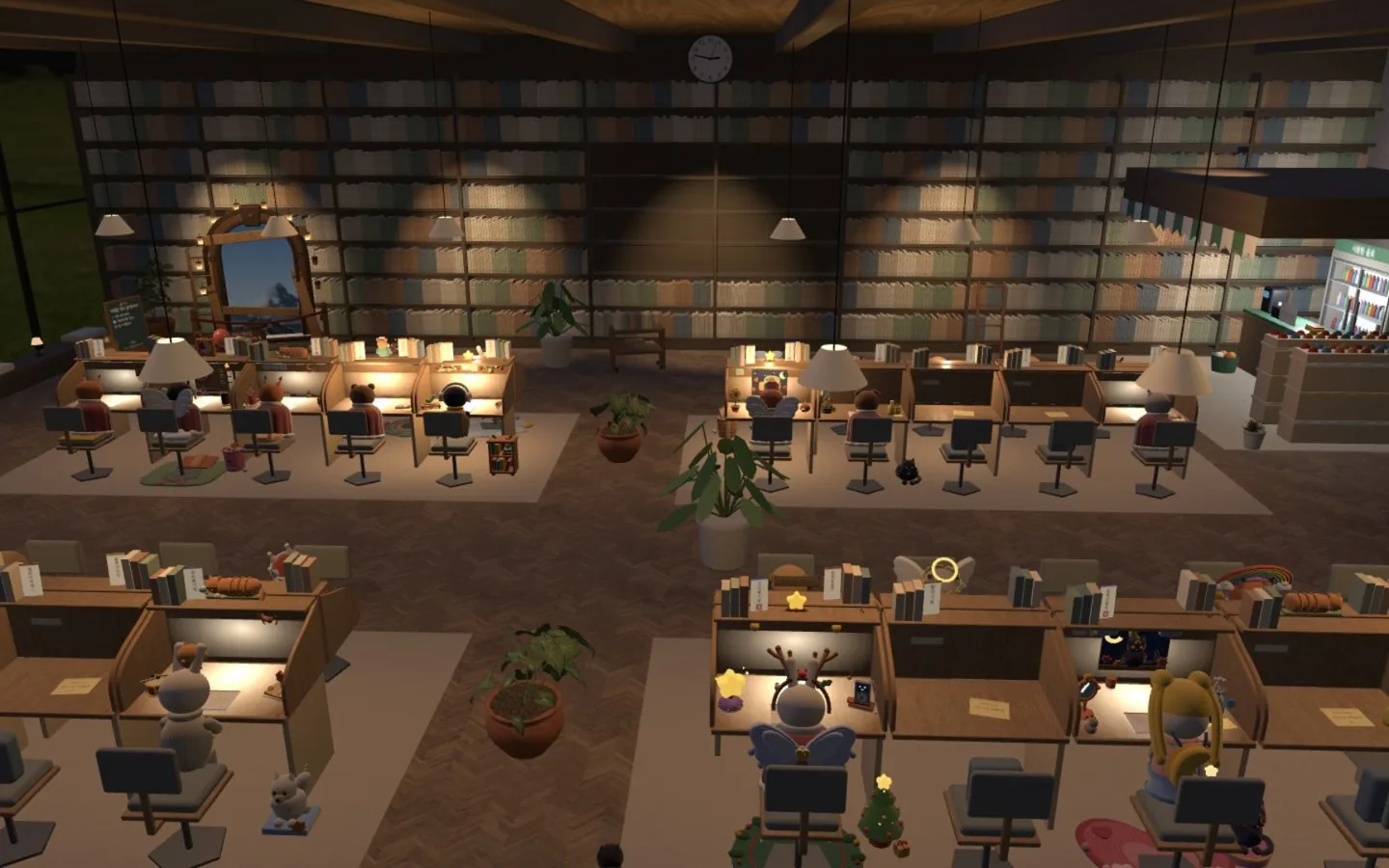
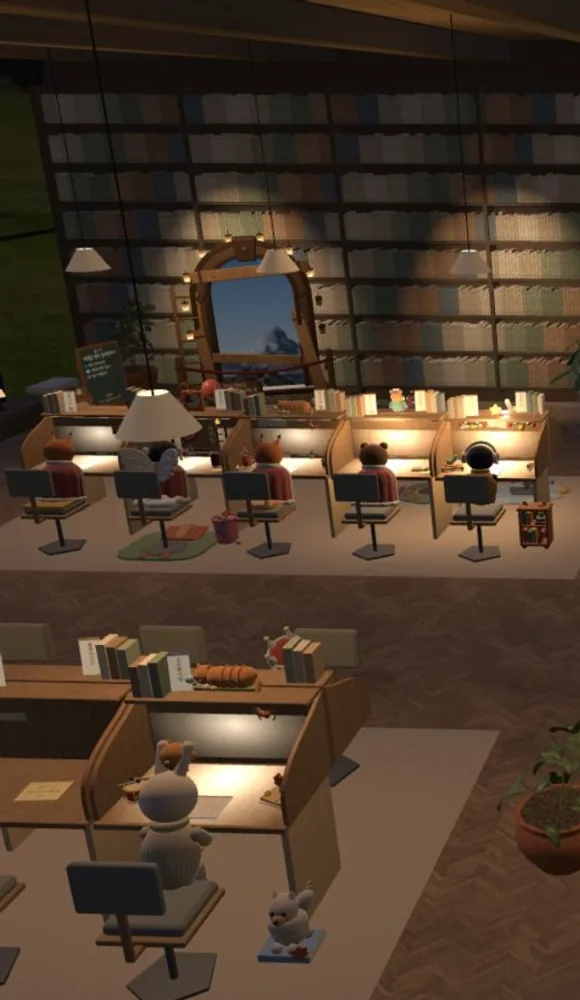
Moazine’s fourth Meterview is 연등룸, an online reading room where you become a little knitted animal, sit among strangers and study together without words. 안진홍, who made 연등룸 alone, brought the feeling of being connected to the person next to you without a single word over to a place for studying. When you choose a room among the library, the café, the hanok and the snowy mountain lodge, the view outside the window follows the real time, and when you write a line of whatever comes to mind, a one-of-a-kind prop appears on your desk.
Please introduce 연등룸 in one line. How did you start making it?
“It’s an online reading room where you sit among strangers as a little knitted animal and study together without words.”
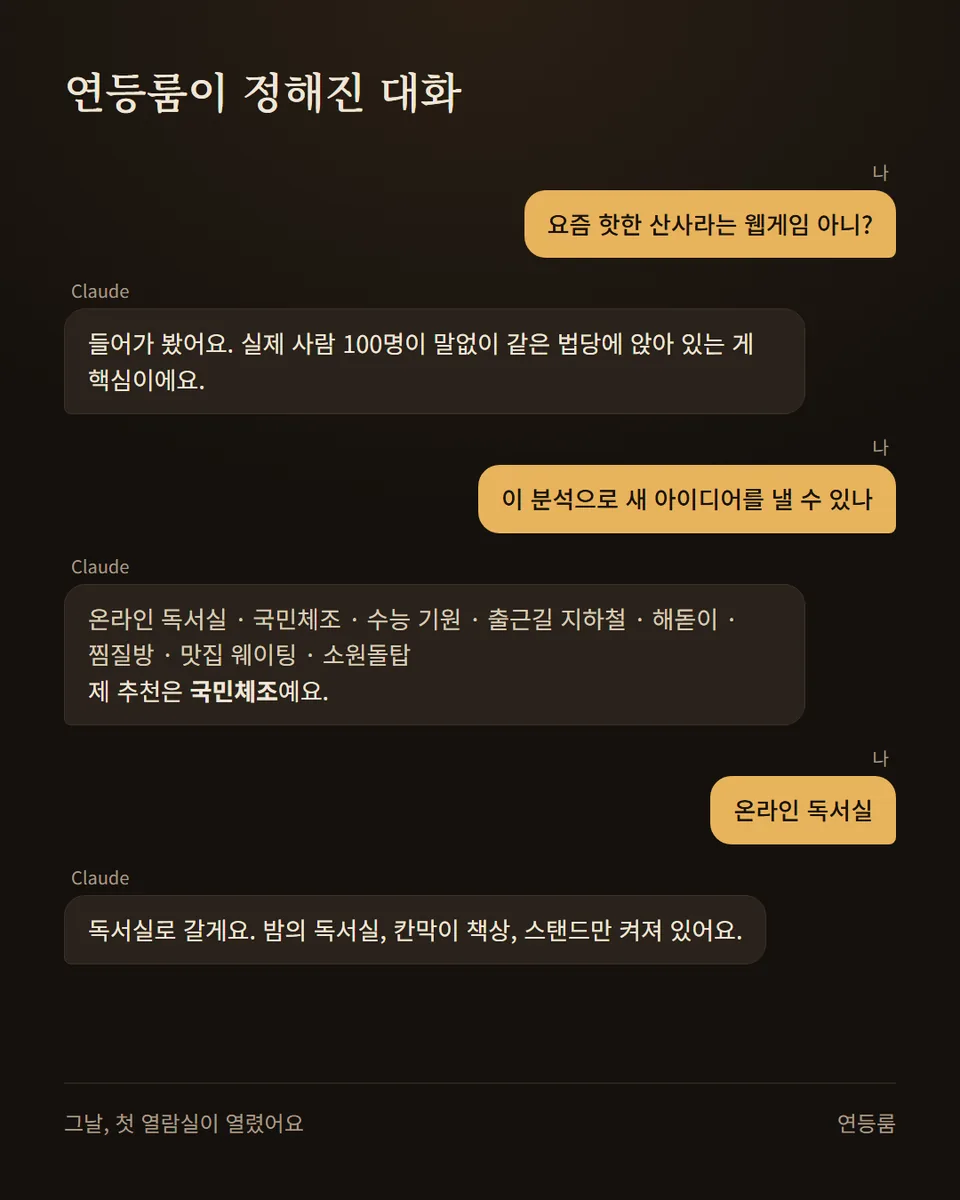
Honestly, it started with 산사1. Seeing 산사 take off on Threads, I thought I should try something too. Among the ideas AI suggested, a study room drew me in. The AI recommended 국민체조 (Korea’s national calisthenics), but I wanted a place where people stay long every day. That same day I opened it as “온라인 독서실 (Online Study Room).”
We’re curious about the feeling in the sentence “a place to study together with strangers, without words.” And why you chose a way with no faces and no chat.
At 산사1, you only bow, without a single word, and yet I liked the feeling of being connected to the person next to you. It also reminded me of walking with strangers in the game “저니 (Journey),” exchanging only chimes. I wanted to bring that subtle sense of solidarity over to a place for studying.
You can’t talk to anyone, so you don’t need to look good either. It’s fine just to sit there.
You can’t talk to anyone, so you don’t need to look good either. It’s fine just to sit there
안진홍 · maker of 연등룸
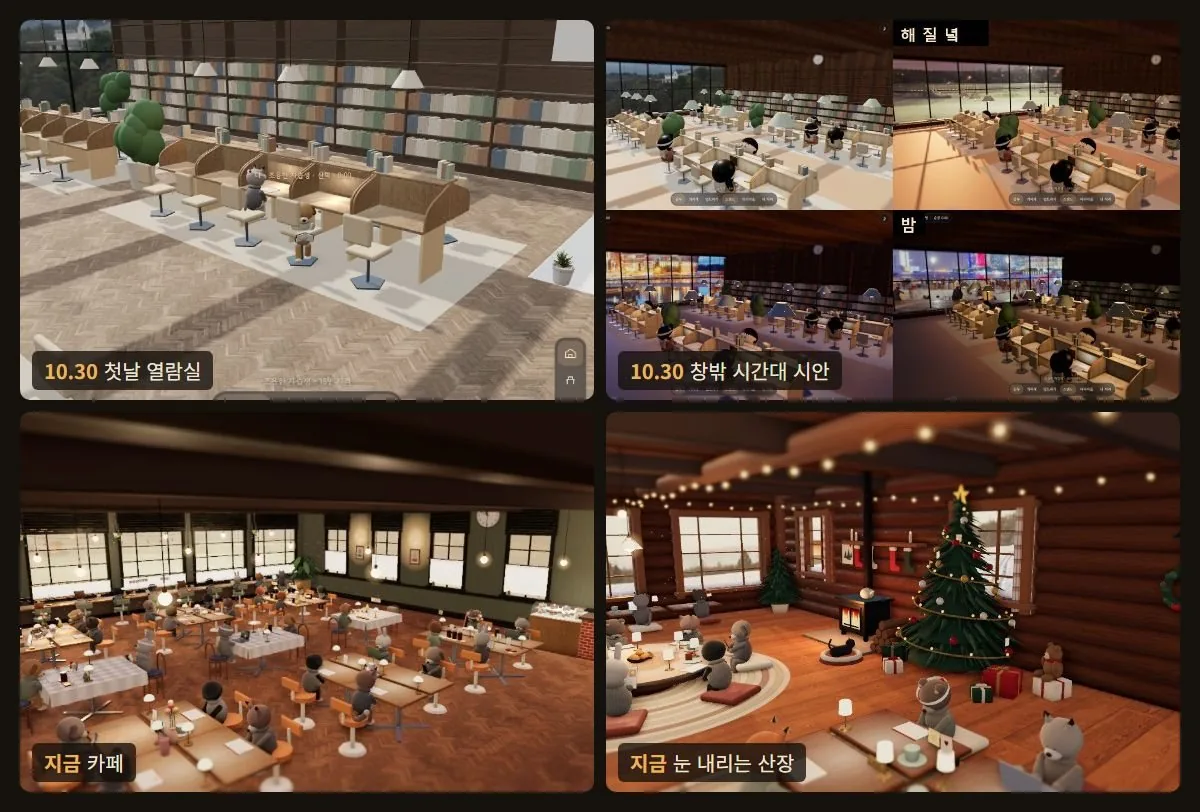
How did you decide on rooms like the library, the café, the hanok and the snowy mountain lodge, and the time and weather outside the window?
The library is 연등룸 itself, so I made it first. The café, the hanok and the lodge were inspired by “Animal Crossing: New Horizons.” I’m an Animal Crossing fan, so I’ve looked at so many photos of themed houses people decorated, and I wanted to bring those cozy spaces over as rooms for studying.
The view outside the window follows the real time. When the night gets late the room gets dark too, and I hoped people studying late would feel that they’re not the only one awake.
How did you make the features that let people feel each other without words, like the little bow, a word left for the next person, and today’s wish lantern?
Most of them are ideas the AI brought up first. The little bow, the word left for the next person, the wish lantern, all of them. I chose among them, and while trying them on my phone I set the direction: “This is too noisy,” “Make this smaller.”
As an aside, writing that stays, like those words, needs moderating. For that, I’m filtering it with Jev, a judgment model that’s been a hot topic lately.
How were the little knitted animals born, and the feature that makes hats, clothes and desk props from a line of text?
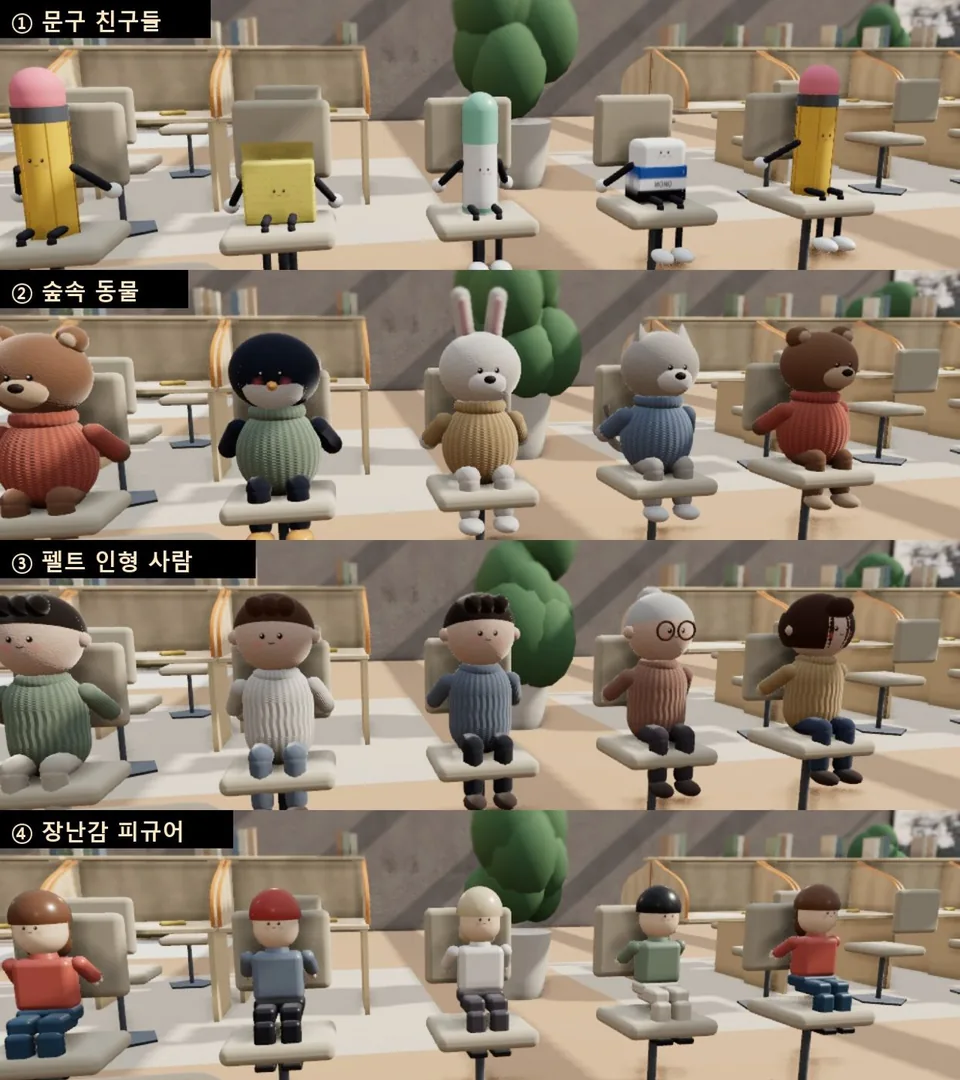
I needed something to show me instead of a face. On the first day I lined up four options side by side, stationery friends, forest animals, felt-doll people and toy figures, and chose; the forest animals were the least burdensome and the cutest. The hand-knitted look also went well with the warm mood of the reading room.
The feature that makes props from a line of text came from a question I’d held on to for a long time. I’d already made several games with vibe coding, and every time, I kept wondering not about writing code fast with AI, but what content is only possible because of AI.
It’s not choosing among a few set outfits: if you write “왕큰 아아 (a super-big iced americano),” an iced americano as big as your face appears on your desk. Whatever comes to mind becomes a one-of-a-kind prop. The one making things isn’t just me, it becomes everyone who comes in. When you put what you made on the market, other people take it and use it too. I think it’s the part where the content got one level deeper thanks to AI.
Is there a moment from 연등룸 that stays with you?
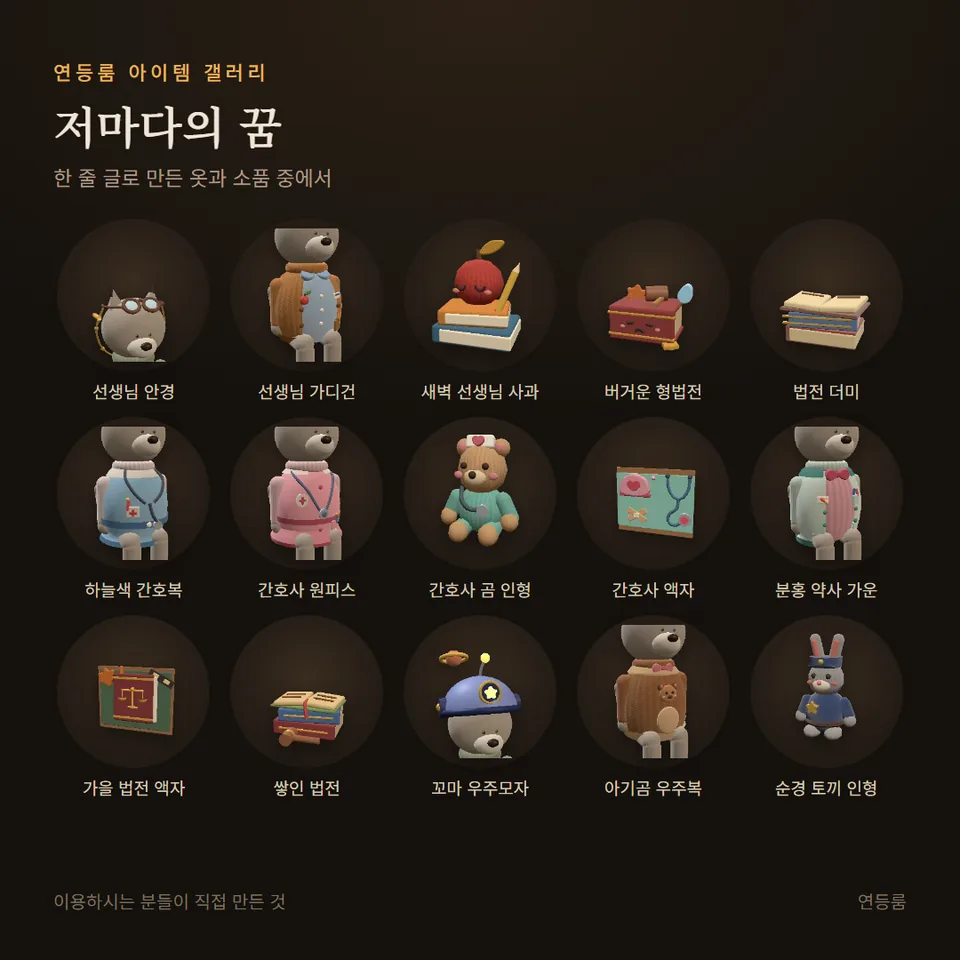
It was while I was looking around the gallery of items people made. Like teachers, nurses, pharmacists and lawyers, people had made their own dreams into clothes and props and were wearing them.
It’s a place without a single word, but seeing at a glance what everyone was sitting there for, all gathered together, moved me. It was the first moment I felt I’d done well to make 연등룸.
If there’s a room or seat you recommend to people coming to 연등룸 for the first time, please tell us.
If it’s your first time, try this.
Sit in the library around 10 p.m.: It’s the time with the most people. Sitting among the rows of lit desk lamps is when the feeling of being together comes through best.
Start on the hour: Every hour on the hour, everyone focuses together for 50 minutes and rests for 10. Do it together once and you’ll know right away what kind of place 연등룸 is.
Leave a word when you go: Give the person next to you a little bow, and when you leave, leave a word for whoever sits in this seat next. On days you want to be alone quietly, the snowy mountain lodge is nice too.
What AI or tools did you make 연등룸 with? We’re also curious whether you made it alone, or how many people worked on it together.
I make it alone. I did the development with Anthropic’s Claude Code. When I say I’d like it to feel like this, Claude writes the code, and every day I go in on my phone and pick: this is meh, this is good.
The 3D is drawn with three.js, and the server runs on Cloudflare. The AI that makes the props is Claude too.
Instead, I go in on my phone several times a day and actually sit there myself. That’s where I find almost everything to fix.
About how many people have visited so far? A rough number is fine.
As of November 17, about 17,000 people have visited. On busy days more than 2,400 people come in a day, and of those, more than 300 a day sit and study for over 30 minutes. Around 10 p.m. there are sometimes more than 60 people sitting at the same time.
Is there anything you’d like to add to 연등룸 from here on?
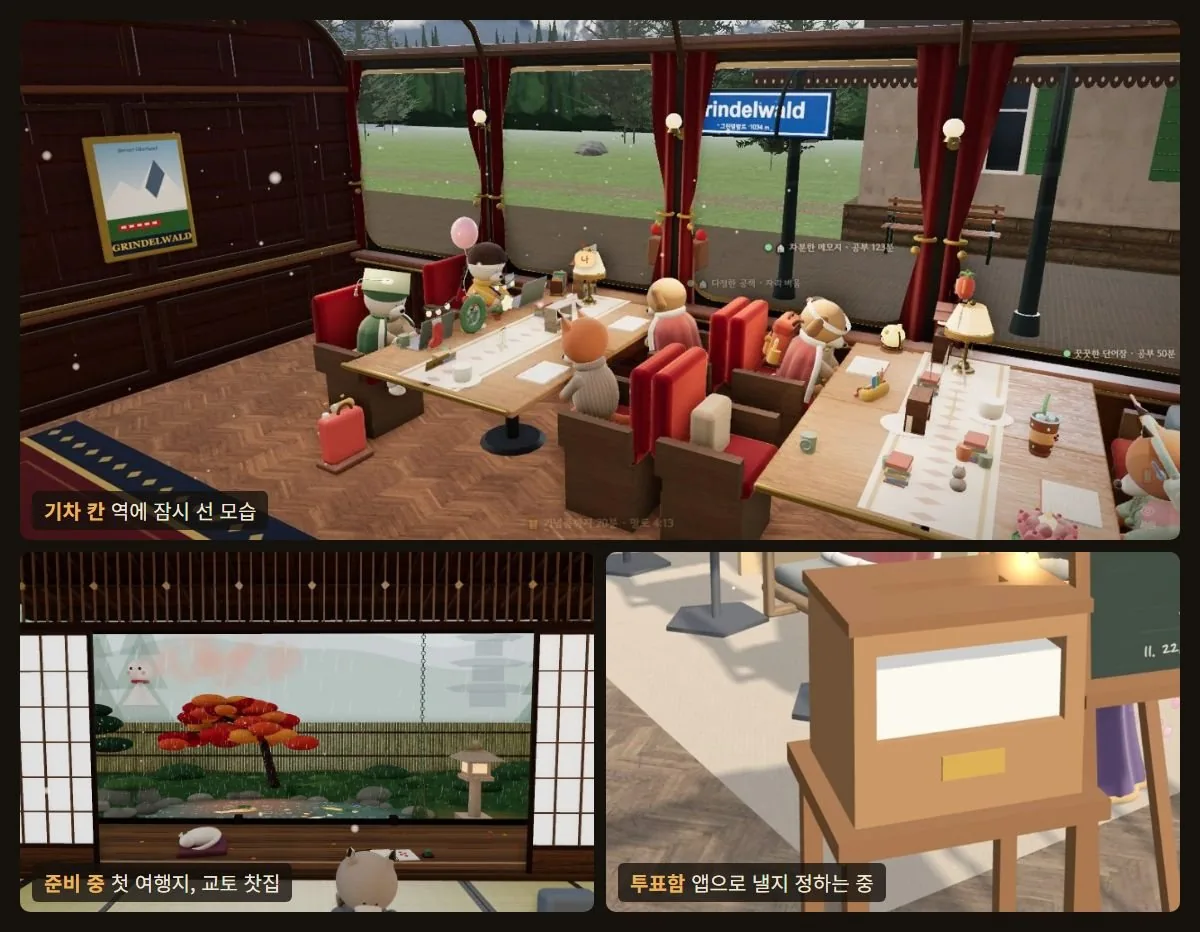
Soon I’m opening train trips. You take a train to a reading room in a different country every week, and if you study there for 30 minutes, you get a stamp in your passport. Sometimes the train stops at a station you’ve never seen. Later on, I want rooms decorated by the people who use it to become next week’s destination.
Whether to release it as an app, I’m deciding now with a ballot box in the room. You have to study together for 10 minutes to cast a vote, and on Sunday night we all open the result together.
Anything you’d like to say before we finish
It’s okay if studying didn’t go well today. Just having sat at your desk is already doing well enough.
If there’s a night when you feel alone, stop by 연등룸. Even without words, someone will always be sitting with you.
Is there something you hold as your standard while making it alone?
I always keep a picture of what I want 연등룸 to be. It’s the scene of someone who was studying alone late at night coming in, seeing a stranger sitting quietly next to them, and feeling a little less lonely.
Every time I make a new feature, I check whether it goes against that picture. Even if it looks fun, if it makes that scene noisy, I take it out. There are many things I made quite far and then took out, like small games for break time and an outdoor café map.
What was the hardest thing about making it alone?
Performance. No matter how pretty it is or how much there is to do, if it lags you can’t enjoy anything. So I think of it as the most important thing.
At first I was worried about phones. With thirty people sitting in a 3D reading room, phones struggle, so I cut down the work it takes to draw one screen, counting it map by map. For the lodge I cut that work to under a third.
But only after posting it on Reddit did I find out. On low-spec laptops it was hard to use at all. Now I’m working on a way to recognise those computers and show a light version from the start. I’m still struggling with it.